Showing posts with label Saudi Arabia. Show all posts

Monday, February 11, 2013

Isn’t it about time for a draft law to protect children from abuse?

By Prof. Fawziah Al Bakr

The story of the little girl Lama that was sexually abused and murdered by her father, who is now in prison awaiting trial, and other recurrent stories like it, show the power of men in this society and their capability of harming weaker parties unable to defend themselves due to lack of awareness, mechanisms and laws that protect children and women from all kinds of harassment and abuse.

Societies are based on families caring for their children. A father and mother’s immediate responsibility in every family is to care for and nurture their children, but that is not what occurs in all cases. In Saudi Arabia, there is a need to form laws that protect weaker entities within the institution of the family. The absence of such laws produce cases like Lama, who die waiting for justice, and this absence of legislation will keep producing others like Lama we may or may not know about.

In the past, it was acceptable and feasible to address similar cases within the context of the family and neighborhood due to the small population of Saudi at that time and the simplicity of the social system. This is no longer possible in this day and age. The population of Saudi has grown enormously and every family within this modern lifestyle system has practically barricaded themselves inside their cement homes, isolated from others around them. Many negative lifestyle options have now become accessible such as drug use and alcohol while the legal system has not caught up by implementing legislation, protocol and social services to prevent and protect against abuse and neglect.

Prof. Fowzia Al Bakr
Our modern times have seen a shift in how we define and view terms like childhood, abuse, neglect and other terms relating to rights in modern social institutions. Our generation was subjected to many forms of verbal and (maybe physical) abuse from teachers, parents, relatives and neighbors according to the prevailing intellectual structure of the society; as the Arabic proverb goes the meat is for the teacher and the bones for the parents. If at that time society did not criminalize many forms of abuse, today there is no room for such practices, even if it is for noble goals. No one can hit a child under the pretext of disciplining or slap a teenager under the pretext of returning him or her to their senses, let alone deliver deliberate harm or neglect or sexual abuse as poor Lama faced that left her body lying in the morgue for four months!!

It is time to wake up. Such practices must be criminalized because it is a crime in our modern time’s definition. Many of the frighteningly light court rulings on cases of domestic abuse do not correspond to the severity of the crime. Civil and Shariah laws should be updated to catch up with Saudi society’s intellectual shift in the understanding of rights and duties. All kinds of abusive behavior against children and women should be clearly identified by law makers and Sharia laws and codified.

There is an immediate need to call for a draft law that clearly defines all forms of abuse including verbal, psychological, physical, and sexual abuse and other forms of sexual harassment and abuse that women and other minorities in society face.

We have grown weary of hearing about the Lamas of our society. Their stories, reverberated by the newspapers and satellite channels, nationally and internationally, have created an awareness among society regarding the lack of a basic law for the protection against abuse. It is high time for legislation to cover this deficiency. Saudi Arabia has signed many international treaties that ensure basic human rights for all and rejects any kind of discrimination. Islamic laws also emphasize the protection of rights for all. Our shared religion and these treaties could help us to initiate laws against neglect and abuse that many have long waited for.

Prof. Fawziah Al Bakr has had a long history in human rights activism. She is a professor of education at King Saud University. She is also a writer who spent three months in prison for her columns. You can read a translation of her article on gender apartheid here and you can follow her on Twitter here.

Tuesday, September 4, 2012

Saudi Arabia to appoint 30 women to Shoura Council

ARAB NEWS

Sunday 2 September 2012

JEDDAH: Saudi Arabia is expected to appoint 30 women on the Shoura Council before the consultative body begins its next annual session. “The expectations are that up to 30 women will be appointed to the Shoura,” sources close to the council told Al-Sharq Arabic daily.


In 2015, Saudi women will have the opportunity to run for civil office.

The newspaper said that talks have already begun with several institutions to propose the names of qualified women in order to be appointed on the Shoura. A high-level panel, headed by the king, will look into the nominees and select the final list, it added.

The move comes after Custodian of the Two Holy Mosques King Abdullah announced the government’s decision to appoint women members on the Shoura in September.

“We made this decision because we refuse to marginalize women in Saudi society in their roles that comply with the Islamic Shariah and following consultations with many of our scholars who supported it,” King Abdullah said. “Muslim women in our history have had stances that cannot be sidelined since the time of Prophet Muhammad (peace be upon him),” the king said. Female members must be holders of Saudi citizenship, be a minimum of 30 years of age with an impeccable personal record, a high level of competency and practical experience.

Sadia, a humanitarian activist, applauded the latest move. She said: “This is a solid step to involve women in the public sphere. We welcome King Abdullah’s decision that will enable women to serve as full members of the Shoura Council and will have the right to participate in the elections. These reforms recognize the significant contributions Saudi women have been making in society and will offer them new ways to participate in taking decisions for the welfare of the community.”

The Shoura Council’s bylaws do not oppose the membership of women and do not specify the gender of the appointed members, the daily reported yesterday. However, since it was founded in 1993, the Council has only had male members.

The Shoura Council in Saudi Arabia

King Abdullah in the same speech, while addressing the Shoura, also announced that women would have the right to run and vote in the 2015 municipal elections. Reacting to the development, dentist Sonia Ali said: “This is excellent start for Saudi women to come out of their shell and take part in governmental activities. This decision of King Abdullah will strengthen the confidence of Saudi women in their abilities.”

Hanouf Al-Jouiad, a postgraduate student, said: “We are thankful to Custodian of the Two Holy Mosque King Abdullah and his government for showing his trust in Saudi women and giving them a chance to be a member of the Shoura Council. Women’s voices will finally be heard and they will be allowed to take part in the decision-making process on serious matters. We look forward to Saudis voting for suitable persons who will be bold enough to take right decisions rather than just looking to work for their interests.”

Fatema Al-Refai, a teacher, said: “We appreciate King Abdullah ‘s efforts to introduce progressive political reforms by opening an opportunity for Saudi women to be a part of the Shoura Council. We hope that the decision taken by the king will benefit women who have been looking forward to making effective contributions to the country’s onward progress. The Shoura Council will give Saudi women an open platform for showcasing their talent and their love for the country. We expect appropriate candidates will be elected to the Shoura Council.”

Click here for original article

Thursday, April 26, 2012

Why Do They Hate Us? By Monal El Tahawy

Why Do They Hate Us?
The real war on women is in the Middle East.
BY MONA ELTAHAWY | Foreign Policy MAY/JUNE 2012


Mona Eltawahy

In "Distant View of a Minaret," the late and much-neglected Egyptian writer Alifa Rifaat begins her short story with a woman so unmoved by sex with her husband that as he focuses solely on his pleasure, she notices a spider web she must sweep off the ceiling and has time to ruminate on her husband's repeated refusal to prolong intercourse until she too climaxes, "as though purposely to deprive her." Just as her husband denies her an orgasm, the call to prayer interrupts his, and the man leaves. After washing up, she loses herself in prayer -- so much more satisfying that she can't wait until the next prayer -- and looks out onto the street from her balcony. She interrupts her reverie to make coffee dutifully for her husband to drink after his nap. Taking it to their bedroom to pour it in front of him as he prefers, she notices he is dead. She instructs their son to go and get a doctor. "She returned to the living room and poured out the coffee for herself. She was surprised at how calm she was," Rifaat writes.

In a crisp three-and-a-half pages, Rifaat lays out a trifecta of sex, death, and religion, a bulldozer that crushes denial and defensiveness to get at the pulsating heart of misogyny in the Middle East. There is no sugarcoating it. They don't hate us because of our freedoms, as the tired, post-9/11 American cliché had it. We have no freedoms because they hate us, as this Arab woman so powerfully says.


Yes: They hate us. It must be said.

Some may ask why I'm bringing this up now, at a time when the region has risen up, fueled not by the usual hatred of America and Israel but by a common demand for freedom. After all, shouldn't everyone get basic rights first, before women demand special treatment? And what does gender, or for that matter, sex, have to do with the Arab Spring? But I'm not talking about sex hidden away in dark corners and closed bedrooms. An entire political and economic system -- one that treats half of humanity like animals -- must be destroyed along with the other more obvious tyrannies choking off the region from its future. Until the rage shifts from the oppressors in our presidential palaces to the oppressors on our streets and in our homes, our revolution has not even begun.

So: Yes, women all over the world have problems; yes, the United States has yet to elect a female president; and yes, women continue to be objectified in many "Western" countries (I live in one of them). That's where the conversation usually ends when you try to discuss why Arab societies hate women.

But let's put aside what the United States does or doesn't do to women. Name me an Arab country, and I'll recite a litany of abuses fueled by a toxic mix of culture and religion that few seem willing or able to disentangle lest they blaspheme or offend. When more than 90 percent of ever-married women in Egypt -- including my mother and all but one of her six sisters -- have had their genitals cut in the name of modesty, then surely we must all blaspheme. When Egyptian women are subjected to humiliating "virginity tests" merely for speaking out, it's no time for silence. When an article in the Egyptian criminal code says that if a woman has been beaten by her husband "with good intentions" no punitive damages can be obtained, then to hell with political correctness. And what, pray tell, are "good intentions"? They are legally deemed to include any beating that is "not severe" or "directed at the face." What all this means is that when it comes to the status of women in the Middle East, it's not better than you think. It's much, much worse. Even after these "revolutions," all is more or less considered well with the world as long as women are covered up, anchored to the home, denied the simple mobility of getting into their own cars, forced to get permission from men to travel, and unable to marry without a male guardian's blessing -- or divorce either.

Not a single Arab country ranks in the top 100 in the World Economic Forum's Global Gender Gap Report, putting the region as a whole solidly at the planet's rock bottom. Poor or rich, we all hate our women. Neighbors Saudi Arabia and Yemen, for instance, might be eons apart when it comes to GDP, but only four places separate them on the index, with the kingdom at 131 and Yemen coming in at 135 out of 135 countries. Morocco, often touted for its "progressive" family law (a 2005 report by Western "experts" called it "an example for Muslim countries aiming to integrate into modern society"), ranks 129; according to Morocco's Ministry of Justice, 41,098 girls under age 18 were married there in 2010.

It's easy to see why the lowest-ranked country is Yemen, where 55 percent of women are illiterate, 79 percent do not participate in the labor force, and just one woman serves in the 301-person parliament. Horrific news reports about 12-year-old girls dying in childbirth do little to stem the tide of child marriage there. Instead, demonstrations in support of child marriage outstrip those against it, fueled by clerical declarations that opponents of state-sanctioned pedophilia are apostates because the Prophet Mohammed, according to them, married his second wife, Aisha, when she was a child.

But at least Yemeni women can drive. It surely hasn't ended their litany of problems, but it symbolizes freedom -- and nowhere does such symbolism resonate more than in Saudi Arabia, where child marriage is also practiced and women are perpetually minors regardless of their age or education. Saudi women far outnumber their male counterparts on university campuses but are reduced to watching men far less qualified control every aspect of their lives.

Yes, Saudi Arabia, the country where a gang-rape survivor was sentenced to jail for agreeing to get into a car with an unrelated male and needed a royal pardon; Saudi Arabia, where a woman who broke the ban on driving was sentenced to 10 lashes and again needed a royal pardon; Saudi Arabia, where women still can't vote or run in elections, yet it's considered "progress" that a royal decree promised to enfranchise them for almost completely symbolic local elections in -- wait for it -- 2015. So bad is it for women in Saudi Arabia that those tiny paternalistic pats on their backs are greeted with delight as the monarch behind them, King Abdullah, is hailed as a "reformer" -- even by those who ought to know better, such as Newsweek, which in 2010 named the king one of the top 11 most respected world leaders. You want to know how bad it is? The "reformer's" answer to the revolutions popping up across the region was to numb his people with still more government handouts -- especially for the Salafi zealots from whom the Saudi royal family inhales legitimacy. King Abdullah is 87. Just wait until you see the next in line, Prince Nayef, a man straight out of the Middle Ages. His misogyny and zealotry make King Abdullah look like Susan B. Anthony.


SO WHY DO THEY HATE US? Sex, or more precisely hymens, explains much.

"Why extremists always focus on women remains a mystery to me," U.S. Secretary of State Hillary Clinton said recently. "But they all seem to. It doesn't matter what country they're in or what religion they claim. They want to control women." (And yet Clinton represents an administration that openly supports many of those misogynistic despots.) Attempts to control by such regimes often stem from the suspicion that without it, a woman is just a few degrees short of sexual insatiability. Observe Yusuf al-Qaradawi, the popular cleric and longtime conservative TV host on Al Jazeera who developed a stunning penchant for the Arab Spring revolutions -- once they were under way, that is -- undoubtedly understanding that they would eliminate the tyrants who long tormented and oppressed both him and the Muslim Brotherhood movement from which he springs.

I could find you a host of crackpots sounding off on Woman the Insatiable Temptress, but I'm staying mainstream with Qaradawi, who commands a huge audience on and off the satellite channels. Although he says female genital mutilation (which he calls "circumcision," a common euphemism that tries to put the practice on a par with male circumcision) is not "obligatory," you will also find this priceless observation in one of his books: "I personally support this under the current circumstances in the modern world. Anyone who thinks that circumcision is the best way to protect his daughters should do it," he wrote, adding, "The moderate opinion is in favor of practicing circumcision to reduce temptation." So even among "moderates," girls' genitals are cut to ensure their desire is nipped in the bud -- pun fully intended. Qaradawi has since issued a fatwa against female genital mutilation, but it comes as no surprise that when Egypt banned the practice in 2008, some Muslim Brotherhood legislators opposed the law. And some still do -- including a prominent female parliamentarian, Azza al-Garf.

Yet it's the men who can't control themselves on the streets, where from Morocco to Yemen, sexual harassment is endemic and it's for the men's sake that so many women are encouraged to cover up. Cairo has a women-only subway car to protect us from wandering hands and worse; countless Saudi malls are for families only, barring single men from entry unless they produce a requisite female to accompany them.

We often hear how the Middle East's failing economies have left many men unable to marry, and some even use that to explain rising levels of sexual harassment on the streets. In a 2008 survey by the Egyptian Center for Women's Rights, more than 80 percent of Egyptian women said they'd experienced sexual harassment and more than 60 percent of men admitted to harassing women. Yet we never hear how a later marriage age affects women. Do women have sex drives or not? Apparently, the Arab jury is still out on the basics of human biology.

Enter that call to prayer and the sublimation through religion that Rifaat so brilliantly introduces in her story. Just as regime-appointed clerics lull the poor across the region with promises of justice -- and nubile virgins -- in the next world rather than a reckoning with the corruption and nepotism of the dictator in this life, so women are silenced by a deadly combination of men who hate them while also claiming to have God firmly on their side.

I turn again to Saudi Arabia, and not just because when I encountered the country at age 15 I was traumatized into feminism -- there's no other way to describe it -- but because the kingdom is unabashed in its worship of a misogynistic God and never suffers any consequences for it, thanks to its double-whammy advantage of having oil and being home to Islam's two holiest places, Mecca and Medina.

Then -- the 1980s and 1990s -- as now, clerics on Saudi TV were obsessed with women and their orifices, especially what came out of them. I'll never forget hearing that if a baby boy urinated on you, you could go ahead and pray in the same clothes, yet if a baby girl peed on you, you had to change. What on Earth in the girl's urine made you impure? I wondered.

Hatred of women.

How much does Saudi Arabia hate women? So much so that 15 girls died in a school fire in Mecca in 2002, after "morality police" barred them from fleeing the burning building -- and kept firefighters from rescuing them -- because the girls were not wearing headscarves and cloaks required in public. And nothing happened. No one was put on trial. Parents were silenced. The only concession to the horror was that girls' education was quietly taken away by then-Crown Prince Abdullah from the Salafi zealots, who have nonetheless managed to retain their vise-like grip on the kingdom's education system writ large.

This, however, is no mere Saudi phenomenon, no hateful curiosity in the rich, isolated desert. The Islamist hatred of women burns brightly across the region -- now more than ever.

In Kuwait, where for years Islamists fought women's enfranchisement, they hounded the four women who finally made it into parliament, demanding that the two who didn't cover their hair wear hijabs. When the Kuwaiti parliament was dissolved this past December, an Islamist parliamentarian demanded the new house -- devoid of a single female legislator -- discuss his proposed "decent attire" law.

In Tunisia, long considered the closest thing to a beacon of tolerance in the region, women took a deep breath last fall after the Islamist Ennahda party won the largest share of votes in the country's Constituent Assembly. Party leaders vowed to respect Tunisia's 1956 Personal Status Code, which declared "the principle of equality between men and women" as citizens and banned polygamy. But female university professors and students have complained since then of assaults and intimidation by Islamists for not wearing hijabs, while many women's rights activists wonder how talk of Islamic law will affect the actual law they will live under in post-revolution Tunisia.

In Libya, the first thing the head of the interim government, Mustafa Abdel Jalil, promised to do was to lift the late Libyan tyrant's restrictions on polygamy. Lest you think of Muammar al-Qaddafi as a feminist of any kind, remember that under his rule girls and women who survived sexual assaults or were suspected of "moral crimes" were dumped into "social rehabilitation centers," effective prisons from which they could not leave unless a man agreed to marry them or their families took them back.


Then there's Egypt, where less than a month after President Hosni Mubarak stepped down, the military junta that replaced him, ostensibly to "protect the revolution," inadvertently reminded us of the two revolutions we women need. After it cleared Tahrir Square of protesters, the military detained dozens of male and female activists. Tyrants oppress, beat, and torture all. We know. But these officers reserved "virginity tests" for female activists: rape disguised as a medical doctor inserting his fingers into their vaginal opening in search of hymens. (The doctor was sued and eventually acquitted in March.)

What hope can there be for women in the new Egyptian parliament, dominated as it is by men stuck in the seventh century? A quarter of those parliamentary seats are now held by Salafis, who believe that mimicking the original ways of the Prophet Mohammed is an appropriate prescription for modern life. Last fall, when fielding female candidates, Egypt's Salafi Nour Party ran a flower in place of each woman's face. Women are not to be seen or heard -- even their voices are a temptation -- so there they are in the Egyptian parliament, covered from head to toe in black and never uttering a word.

And we're in the middle of a revolution in Egypt! It's a revolution in which women have died, been beaten, shot at, and sexually assaulted fighting alongside men to rid our country of that uppercase Patriarch -- Mubarak -- yet so many lowercase patriarchs still oppress us. The Muslim Brotherhood, with almost half the total seats in our new revolutionary parliament, does not believe women (or Christians for that matter) can be president. The woman who heads the "women's committee" of the Brotherhood's political party said recently that women should not march or protest because it's more "dignified" to let their husbands and brothers demonstrate for them.

The hatred of women goes deep in Egyptian society. Those of us who have marched and protested have had to navigate a minefield of sexual assaults by both the regime and its lackeys, and, sadly, at times by our fellow revolutionaries. On the November day I was sexually assaulted on Mohamed Mahmoud Street near Tahrir Square, by at least four Egyptian riot police, I was first groped by a man in the square itself. While we are eager to expose assaults by the regime, when we're violated by our fellow civilians we immediately assume they're agents of the regime or thugs because we don't want to taint the revolution.

SO WHAT IS TO BE DONE?

First we stop pretending. Call out the hate for what it is. Resist cultural relativism and know that even in countries undergoing revolutions and uprisings, women will remain the cheapest bargaining chips. You -- the outside world -- will be told that it's our "culture" and "religion" to do X, Y, or Z to women. Understand that whoever deemed it as such was never a woman. The Arab uprisings may have been sparked by an Arab man -- Mohamed Bouazizi, the Tunisian street vendor who set himself on fire in desperation -- but they will be finished by Arab women.

Amina Filali -- the 16-year-old Moroccan girl who drank poison after she was forced to marry, and beaten by, her rapist -- is our Bouazizi. Salwa el-Husseini, the first Egyptian woman to speak out against the "virginity tests"; Samira Ibrahim, the first one to sue; and Rasha Abdel Rahman, who testified alongside her -- they are our Bouazizis. We must not wait for them to die to become so. Manal al-Sharif, who spent nine days in jail for breaking her country's ban on women driving, is Saudi Arabia's Bouazizi. She is a one-woman revolutionary force who pushes against an ocean of misogyny.

Our political revolutions will not succeed unless they are accompanied by revolutions of thought -- social, sexual, and cultural revolutions that topple the Mubaraks in our minds as well as our bedrooms.

"Do you know why they subjected us to virginity tests?" Ibrahim asked me soon after we'd spent hours marching together to mark International Women's Day in Cairo on March 8. "They want to silence us; they want to chase women back home. But we're not going anywhere."

We are more than our headscarves and our hymens. Listen to those of us fighting. Amplify the voices of the region and poke the hatred in its eye. There was a time when being an Islamist was the most vulnerable political position in Egypt and Tunisia. Understand that now it very well might be Woman. As it always has been.


Mona Eltahawy
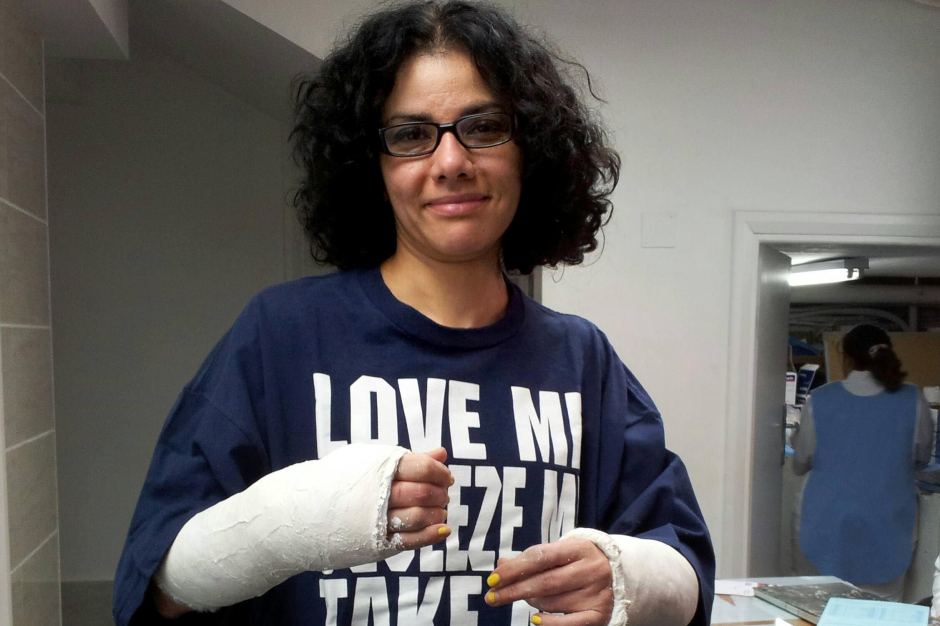
is an Egyptian-American columnist. In November 2011, Egyptian police beat her, breaking her left arm and right hand, and sexually assaulted her. She was detained by the Interior Ministry and military intelligence for 12 hours.

The original article published in Foreign Policy MAY/JUNE 2012 can be found HERE


Wednesday, April 18, 2012

Muslims, not Arabs - By Arshi Saleem Hashmi

Since the 1970s, many factors have combined to make Pakistan a fertile ground for the Wahhabi creed exported by Saudi Arabia. How might the next generation of Pakistanis change this? By Arshi Saleem Hashmi (Published in the Friday Times, Pakistan's weekly Independent Newspaper)

SAVE Sister Arshi Saleem Hashmi


C. G. Jung beautifully describes the synthesizing Indo-Persian culture that historically shaped Muslim identity in the subcontinent in these words:
"The Taj symbolized an incredible flowering of the "delicate secret of the rose gardens of Shiraz and the silent patios of Arabian palaces... in the rich Indian earth"

- (Civilization in Transition, the Collective Works of C.G.Jung Vol. 10. P. 519-520)

The confusion over the Arabist shift with the Islamization process has led to the monolithic world view derived from Islamic orthodoxy and has become the guiding principle for many radical young minds in Pakistan. In Pakistan, our dilemma has been that domestic and international politics as well as societal issues are articulated in a purely religious idiom. Such Islamic indoctrination emphasizes that political and social developments are shaped primarily by the conflict-based interaction between Islam and other religions, especially Hinduism, Judaism and Christianity. Instead of emphasizing the notion of Pakistan as a nation state based on cultural and religious pluralism, ideas like Islamic universalism, militancy and "Islam versus the rest" are highlighted by radical religious groups which have affected the psyche of the whole nation.

The Zia regime linked Arabism with Islam, not realizing or deliberately ignoring the fact that Islam is a religion, while "Arabism" is more of a cultural notion. "Islamization" of the society through "Arabization" was considered the right policy by the regime at that time. To ensure that the next generation of young Pakistanis was full of Islamic zeal and "well informed" of their glorious past, education was made the first casualty of this experiment.

Though the secular leadership of the Pakistan Movement emphasized the Muslim community, it never intended to create a theocratic Sunni state. The early death of Mohammad Ali Jinnah left the question of Islam's role in society unresolved. Pakistani leaders have frequently used religion to define state ideology. Historian Ayesha Jalal argues that this has led to Islam actually becoming a "divisive force in so far as it is being utilized by the state to deny people's rights or even to deny diversity."

Pakistan's constant socio-political upheavals have led to disillusionment among the masses. The youth is unable to see a promising future, and hence tries to attain solace in religion; and that is where radical religious organizations exploit them. It is historically true that a strong sense of grievance has reinforced Islam's role as a medium for asserting identity by its followers.

During the Cold War, while the state was defining religion for us, educational institutions under the guideline provided by the authorities were endorsing a false perception that Islam was spread through the sword (waging Jihad against infidels). Further, public opinion was made to reflect the idea that Arabism and Islam are complementary and mutually reinforcing. In their drive towards homogeneity and authenticity of Islam, Saudi Arabia and other Arab countries and the recipients of their money (non-Arab Islamic societies) equally emphasized 'Arabization' as the norm, the pure and ideal form of Islam to be followed by Muslims.

It is interesting that initially, the Sunni Bralevi groups were encouraged against progressive, liberal parties in order to create the "Islamic character" of the nation that was "lost "due to Bhutto's social democracy. But as they say, no one can survive without money for long, and neither did these groups.

The government needed money, and Saudi Arabia provided wealth with only one caveat: to encourage Wahhabi ideology in the Pakistan/Afghanistan region. One reason for this was to "serve" the religion whereas the other was purely geo-political, as Saudi Arabia wanted to have its influence in the region to counter Shiite Iran. The Arabi versus Ajami war was fought on our grounds. The US administration was satisfied as the Soviets were contained through Saudi Arabia without the need of a single US soldier on ground.

Historically, Wahhabism had never taken root in the region because it prohibited a lot of practices that were common to South Asian life. Wahhabism was largely confined to the Arabian Peninsula until the 1960s, when the Saudi monarchy gave refuge to radical members of the Muslim Brotherhood fleeing persecution in Nasser's Egypt. The isolated Wahhabi creed of the Saudi religious establishment and the Salafi jihadist teachings of Sayyid Qutb, who denounced secular Arab rulers as unbelievers and legitimate targets of holy war (jihad), were coordinated and co-opted. Thus it was the synthesis of Wahhabi social and cultural conservatism, and Qutbist political radicalism, that produced the militant variety of Wahhabist political Islam that eventually produced al-Qaeda.

During the 1970s, Wahhabi clerics encouraged the spread of their ideology into Saudi universities and mosques, because it was seen as a barrier to the threat of cultural Westernization and the spread of the corruption that accompanied the 1970s oil boom. The diversion that the royal family seized upon was the Soviet invasion of Afghanistan. Wahhabism gained considerable influence in the Muslim world following a tripling in the price of oil in the mid-1970s.

The new Islamic identity was then the steady process of transformation from a secular, inclusive and an adaptive form of Islam to a more textual, ritualistic and exclusive one guided by exogenous forces, as ideas, practices and finances flowed in from the Arab world. The transformation brought about conflicts - not only within Islam with regard to its correct interpretation and desirable way of life, but also among Muslims and other countries.

Pakistan continued to grapple with the question of its identity - whether to be a secular democratic country for Muslims and other religious minorities or an Islamic state. Even now most Pakistanis remain vague about their faith. To most, Islam is intermixed with folk practices and Sufism.

Moderate non-Arab Muslims all over the world and Pakistanis in particular need to work towards reinventing a true synthesis of culture and religion rather than being influenced by Arabization to prove their true Islamic credentials. De-Arabization can help Pakistan ease relations with its immediate South and Central Asian neighbors with whom relations have been severely affected due to the deliberate association with Saudi Arabia.

Interestingly, the more Pakistan tries to associate itself with the Arab world, the more it is reminded of its non-Arab credentials and its South Asian roots. The crisis in Pakistan has exposed the Arab lack of empathy vis-a-vis violent conflicts, natural disasters and health issues. Pakistan's position as a non-Arab, non Middle Eastern country that is not connected with Arab politics and culture is very clear among the Arabs. As columnist Rafia Zakaria has written: "This point, emphasized repeatedly in the coverage of Obama's speech by Al Jazeera, Al Arabiyya and other networks, should be worthy of note to Pakistanis. Not only did several Arab anchors refuse to acknowledge the refugee crisis and civil war in Pakistan as a pressing issue facing the Muslim world, they quite indifferently discarded it as something inconsequential to the Arab world."

Despite this attitude, Pakistani political-religious parties as well as radical militant groups are all praise for the "Brother Arab" countries, whose only display of brotherly attitude is showering these organizations and political parties with millions of dollars of zakat money. This should be enough to remind the so-called "Arabist" proponents that for Arabs, South Asian Muslims are just another underdeveloped community, which needs to be purified by an Arabist shift in their culture.

The long-term solution to the problem of identity would require massive changes in the fundamental agents of socialization of Pakistan's polity. Pakistan at present faces the challenge of reinventing itself both at the state level as well as the societal level. More so, it needs to adopt a top-down approach to reform and reconstruct the conceptual and ideological orientation to undo the state's enforcement of a particular sect of Islam.

If society appears indifferent about the nature of religiosity, it is not because people want it that way, but because there is a great deal of confusion that can only be removed if the state starts to patronize a pluralist society. This can be done through reforming of education syllabi, media programs and free intellectual discourse on religion and culture in the Pakistani context.

The key question is this: how far will the new generation differ from the one that was lost to orthodoxy and militancy?

Click on the following Link to view the original articlehttp://www.thefridaytimes.com/beta2/tft/article.php?issue=20120413&page=28


Thursday, November 18, 2010

UN Women and Saudi Arabia - a demystification of the roles of the Executive Board

Controversial bids by countries with poor women's rights records to join the Executive Board of UN Women has caused an uproar. It has also exposed a confusion about the role of the newly-created body. Here we offer a short demystification of the issues involved. 


UN Women’s recent announcement that Saudi Arabia and the Democratic Republic of Congo (DRC) will be on its Executive Board has stirred much controversy and some confusion as to the responsibilities of countries on the Executive Board. The two countries have miserable reputations for the protection of women’s rights. Rape as a weapon of war is widespread in the DRC, and Saudi Arabia’s strict interpretation of Islam severely restricts women’s economic and social rights. Iran, a country that preserves practices such as death by stoning as punishment for adultery, also bid to join the Executive Board, but was unsuccessful.
Iranian Nobel Peace Prize winner Shirin Ebadi called Iran and Saudi Arabia’s bids “a joke”, claiming that the board “will not get anywhere” with these two countries as members. Blogger Saudiwoman rejected this claim, saying that by including Saudi Arabia, UN Women may have more influence over the country’s human rights policies, and “engage Saudis and educate women here on their rights”.
There seems to be some confusion in this debate as to what UN Women will actually do and what responsibilities fall to its executive board. UN Women has been created to streamline the several previously-existing women’s rights agencies into one body – these agencies were UNIFEM, the International Research and Training Institute for the Advancement of Women, the Division for the Advancement of Women and the Office of the Special Adviser on Gender Issues and Advancement of Women. It will become operational in January 2011.
UN Women is mainly a monitoring and technical support body. It aims to “support Member States to advance gender equality, in line with national priorities and international norms and policies.”  This means that not just those states that are on the Executive Board will be held accountable for the standard of their women’s rights protection. All UN Member States are to keep in line with gender equality resolutions made by the General Assembly, which are politically binding, and Security Council, which are legally binding. UN Women is there to monitor their progress in implementing UN commitments. Saudi Arabia will be no more thoroughly monitored due to its position on the Board than any other country would be. What’s more, the Member States get to decide when and what kind of help UN Women provide within their states. So UN Women will only be helping out in Saudi Arabia and DRC if they are invited to do so. Such is the nature of sovereignty.
So what is the purpose of the Executive Board? There are 41 members on this Board, drawing from 5 major regions of the world: Africa, Asia, Latin America and the Caribbean, Western Europe and Eastern Europe. Six of the states are taken from major contributing countries, a category which includes the USA, UK and Saudi Arabia. One function of the Board is to establish which countries have the greatest need for support. UNIFEM works in 80 countries of the world, according to requests for help and the organization’s judgment of which countries need their technical support most urgently. This pattern will be continued by UN Women in its decisions on how to allocate its financial and technical resources.

As far as innovation goes, the board will be able to influence policy making by recommending new initiatives to the Council and Assembly and approve country programs and projects within its own field.

All this means that the countries on the board must agree to what policies the agency will advocate for. The diversity of State practices in women’s rights represented on the board could make progress slow and halt forward-thinking policies. However, each region of the world must be represented – without fair representation there is the danger of Western states being accused of cultural imperialism.

UN Women can be a useful body for the creation of new international frameworks for women’s rights. However, cooperation with these standards still largely falls down to the individual State’s willingness to change their laws and practices. If Saudi Arabia does not invite UN Women to intervene in its country, there is little UN Women can do apart from exert political and diplomatic pressure. Saudi Arabia’s presence on the board may lead to the expression of some less progressive views on women’s rights, but it may also encourage a change of mindset for some Saudi policy-makers. Next year, UN Women will begin to operate, and we must hope that the Executive Board members undertake their offices in good faith, and with a good understanding that their position requires them to make furthering the freedom of women their main goal.

Wednesday, November 10, 2010

Saudi female cashiers fatwa increases women's economic vulnerability


 Female Saudi cashiers are forbidden by recent fatwa. Amer Hilabi / AFP via www.thenational.ae

It is now prohibited for women to work as cashiers in Saudi Arabia’s shops, according to a fatwa issued by the Senior Board of Ulema at the end of October.

Many Saudis have been expressing their frustration with the ruling, which is intended to prevent the mixing of sexes by preventing women from seeking jobs where they could encounter men.

A conservative preacher called for a boycott of supermarkets employing female cashiers back in August, violating a government restriction on fatwas issued by clerics outside of the Senior Board of Ulema. The board itself has now taken up the idea, stating that  “It is not permitted for a Muslim woman to work in a mixed environment with men who are not related to them, and women should look for jobs that do not lead to them interacting with men which might cause attraction from both sides.”

The Saudi Gazette pointed out the inconsistency of the fatwa with other recent rulings by Saudi clerics. A fatwa approved by Shaykh Bin Baz which stated that “a human being, man or woman, is required to work and practice business,” and that “it is acceptable for women to work for what men require and for men to work for what women require in a way that does not harm either of them.”

A piece in Okaz, translated by Arab News, pointed out the obvious gender discrimination present in the fatwa, asking: “why is it not considered gender mixing when a man sits on the cashier’s desk and sells cheese, beans and olives to women?

“Why is it not permissible when the opposite happens? Why is it considered gender mixing and against Islam when a woman sits at the cashier’s desk selling cheese, beans and olives to men?”

The greatest danger of this fatwa is that many women working in these jobs need the money urgently, as commentators have pointed out. This fatwa makes it even more difficult for them to support themselves economically. As many studies have shown, lack of economic and social opportunities is one of the main driving forces that encourage individuals to join extremist movements. Often these groups offer a sense of purpose and the opportunity to earn money to people who are otherwise unemployed or vulnerable. Several high-profile cases, such as that of Wafa'a AL-Shahri, have shown that Saudi Arabia’s women are far from impermeable to the allure of extremist movements such as Al Qaeda in the Arabian Peninsula (AQAP). Taking more job opportunities away from women can only be a step backwards in the struggle for gender equality and the fight against violent extremism.

Friday, January 29, 2010

"A New Alliance Against Terror Cells" by Dr. Edit Schlaffer

Our fear of terrorism has once again caught up with us. It takes only one radical, who carries out his meticulous plans with deadly determination, to blow up the carefully constructed structure of secret intelligence and security measures. 


It is interesting to note the immediate reactions to the newest attempt to attack a passenger plane en route to Detroit. They include strict security measures from full-body x-rays to the expansion of the flight ban for those on the terror watch list. But: we all know that our security is not guaranteed, nor are the terror experts trying to reassure us. The images from a US training video that depict how the amount of powder Umar Abdulmutallab had hidden in his underclothes could blow up a Boeing in a matter of seconds will haunt us for a long time to come. At the very latest, they will reappear during our next overseas flight.

Flash Points: Edit Schlaffer presents SAVE on CBS