Showing posts with label SAVE Pakistan. Show all posts

Sunday, September 16, 2012

Violence is not the Answer to the Childish Attempt Against the Holy Prophet Muhammad (PBUH)


By Arshi Saleem Hashmi, SAVE’s Chapter Leader in Pakistan

Arshi Saleem Hashmi
The childish attempt by a film maker to humiliate the sanctity of an Abrahamic religion should be condemned. Like many attempts in the past where some people in their own capacity tried to ridicule Islam and particularly the last prophet Muhammad (PBUH) was reflection of their own narrow thinking. This film does not amount to what majority of the people belonging to different faiths in the west think; this particular film is a brain child of an ignorant who tried to capitalize the anti-Muslim feelings.  It is important to understand that just like the obscurantists who do not respect other religions are not the representative of the Muslim all over the world, these people, who have been trying to ridicule the foundation of Muslim faith, are not the representative of the tolerant tradition of the western societies. One of the basic tenets of our religion Islam is to respect all the religions especially Abrahamic religions. It is not widely known in the west that a Muslim is supposed to respect and believe in all the prophets and the books that were sent from the God.  Majority of the Muslim believe in tolerance and understanding. Having said that, any insult to the prophet Muhammad would not be accepted by any Muslim, the extremists might have reacted violently which is wrong, but it did hurt even those who do not considered themselves as strictly practicing Muslims. It is more about faith being targeted then about extremist narrative of present day Islamists. 

Protesters in Tahrir Square carry a poster of Osama Bin Laden, (c) Reuters
In Pakistan, religio-political parties protested against the film, Jamat-e-Islami, Jamaatu Dawa and other groups protested in different cities in Pakistan. The government of Pakistan denounced this and issued a statement against the film. The local provincial assemblies also discussed and issued statements condemning the film. Compared to Libya and other Arab countries, protests here were nonviolent mostly though they did try to reach to US Embassy in Islamabad but due to tight security they were controlled.  The instant reaction in the Arab world was due to the obvious reasons that when it comes to Islamist jihadists, action against them is justified but when attempts to humiliate the most sacred personality of Islam; it is categorized as freedom of expression. 

In Pakistan, the film has generated interesting debates and TV channels are showing many programs where the discourse is whether the hate speech in Muslim countries target or ridicule the sacred personalities of other faiths or they focus more on the policies and politics of the western countries who happened to be belonging to Christian faith.  So the dichotomy here is Muslim antagonism is due to the policies of the West particularly the US while the views that have expressed in film is focused on the most sacred Personality in Islam. A positive sign in Pakistan mainstream media is to initiate debate on this issue and majority of the people though emotionally hurt, are listening to these discussions. Any violent expression would still be a minority act just like the making of the film is a minority expression in the US.  The gist of the debate is that western freedom of expression is not universal and should not be considered as a universal definition. The point is also being raised that despite all the hate speech and violent expressions against western policies, no attempts has ever been done to make a film on ridiculing Jesus Christ (PBUH) or Moses (PBUH, the West should also consider the way freedom of expression is defined in Muslim traditions.

Majority of Pakistanis believe in respect for all the Prophets in Abrahamic religions and they do not support violence but just like anti-Islam  minority views in the US and the West, minority views in the Muslim world will continue to react violently as they would interpret it as an attempt approved by the US in order to provoke extremism. The life of our holy Prophet Muhammad (PBUH) is the great example where in his lifetime he ignored harshest critics who tried to humiliate him, ridiculed his message and tried to hurt him physically. We should learn from our beloved prophet, we can raise voice against this act, we can protest with the US officially. Violence is not what Prophet Muhammad (PBUH) taught us. 

Friday, April 15, 2011

"No struggle can ever succeed without women participating side by side with men"

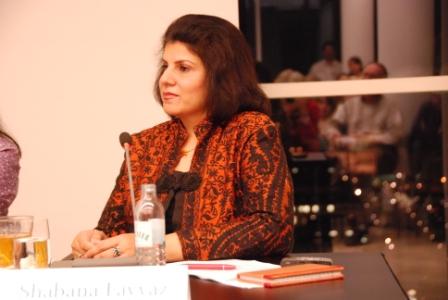
Shabana Fayyaz taking part in the SAVE Women's Dialogue
Shabana Fayyaz, SAVE Pakistan representative and Assistant Proffessor at the Defense and Strategic Studies Department of Quaid-i-Azam University in Islamabad, reflects on the critical role of women in combatting extremism in Pakistan, and on the inclusive teachings of Quaid, founder of Pakistan.

In Pakistan women deserve a critical role to play at the state/society policy shaping and making level. Women in Pakistan constitute more than half of the country's population. Female icons since the creation of our country have played and continue to play a decisive role on all fronts - yet their role as 'agents of change' remains under-appreciated, both by themselves as well as state/society at large.

The SAVE Pakistan chapter is a step in the right direction to make unheard stories of women’s contributions known. Women’s role in ‘social cohesion’ needs to be registered through multi-track interventions. That is, investing in the training and capacity building of existing women-based networks to counter extremism at the micro and macro level.

There exists a critical gap in the existing indigenous literature on women and extremism accompanied by a tendency to frame women as ‘victims’ and not recognizing their role as ‘healers’ in society. By following a victimhood lens, the women are mostly reduced to being either a ‘sufferer’ or a ‘silent spectator’, ignoring the ground realities. The fact of the matter is that women have a central role simultaneously at the family and at the community level. At times, particularly in the case of SWAT, it was womenfolk that served as a critical fund-raiser plus a victim of Maulana Fazlullah’s so-called ‘Islamization’ drive. Many mothers were aware of their sons’, brothers’ and husbands’ radical tendencies but looked the other way purposefully, thinking that it would lead to an equitable and just society - as pronounced by Maulana Fazlullah’s in his sermons through a mobile radio network in the area.

The role of women in curtailing, spreading and tolerating extremism in Pakistan remains an under-researched area. There is an abundance of contemporary literature on the genesis of extremism in the country but focus on women as an equal stake-holder in the policy-making and shaping arena remains untouched. There exists a niche to critically focus on sensitizing women leaders from all over the country on how to build and nurture their role as “agents of change” through team-building initiatives. And it is only through informed debate, dialogue and discussion that an inductive and inclusive counter-extremism policy can be shaped.

As it is often said, who will bell the cat? It is state and society together. The extremism and terrorism facing Pakistan falls in between traditional and non-traditional security challenges. It requires an inductive and sustainable response on the home front. That is, optimal use of women as key stake holder in response to radicalization, extremism and political violence. In this enterprise, media (including print, television, radio, and on-line) has the capacity to be a ‘change-maker’ in airing not only the stories told through the ‘victimhood lens’ but also highlighting the on-going efforts of the courageous women leaders on the ground against religious, cultural and political extremism. Parallel to this, learning and sharing the best practices on how women became an agent of change for sustainable peace in all parts of the world should be encouraged.

In conclusion, women facing and fighting extremism need to be recognized as viable and critical partners in the fight against the quagmire of extremism in Pakistan. That is, we need to reclaim Quaid’s vision of a moderate and progressive Pakistan, whereby a woman is an essential stake holder in the policy making arena. Now is the time to rectify our earlier deeds, when women’s activism was/is perceived as a threat to the so-called social, cultural and religious underpinnings of a stable Pakistan. In conclusion, the following words of Quaid - the founder of Pakistan, (in a speech at the Islamia College for women on 25 March 1940) are worth recalling:

“I have always maintained that no nation can ever be worthy of its existence that cannot take its women along with the men. No struggle can ever succeed without women participating side by side with men. There are two powers in the world; one is the sword and the other is the pen. There is a great competition and rivalry between the two. There is a third power stronger than both, that of the women”.

Thursday, March 17, 2011

Comparing Pakistan with Bangladesh: Is South Asia Moving Toward Secularism?

Bangladesh has recently upheld a decision to ensure the separation of politics from religion. Arshi Saleem Hashmi, member of SAVE Pakistan, compares the situation in Bangladesh with that of Pakistan in a new article published by the Institute of Regional Studies, arguing that Bangladesh is creating the secular state that Mohammed Ali Jinnah, the founder of Pakistan, envisioned for his country.

BANGLADESH BAN ON RELIGION-BASED POLITICS: REVIVING THE SECULAR CHARACTER OF THE CONSTITUTION

The decision of the Bangladesh Supreme Court regarding the ban on religion-based politics must be seen in this historical perspective. It reflects the ideology of the country’s founding fathers and has restored the original Constitution of the People's Republic of Bangladesh. Following the SC Appellate Division’s decision upholding the High Court's landmark verdict of 29 August 2005 that declared the Constitution’s Fifth Amendment (1979) illegal, the ban on formation of political organizations based on religion was restored. The verdict also paved the way for ensuring secularism as the “cornerstone” of the Constitution. The Supreme Court decision vacated the stay it had granted the then BNP-JI-led government the same day that the HC judgement was announced in August 2005. (The SC Appelate Division’s verdict, which was issued in January 2010, became trapped in an appeals process until 29 July 2010.) According to Bangladeshi Law Minister Shafique Ahmed, carrying out activities of any political party based on religion is a punishable offence under the Special Powers Act. Political parties and other organizations using religion as their guideline stand banned with the annulment of the Fifth Amendment.

In the wake of this verdict, the Election Commission of Bangladesh, on 26 January 2010, asked the three religion-based parties — Jamaat-e-Islami, Bangladesh, Khelafat Andolan and Tarikat Federation — to amend their charters as they were in conflict with the supreme law of the land.

It is important to note that unlike Pakistan, in Bangladesh, the Awami League gave the nation its first constitution within one year of independence, based on the four cardinal principles — secularism, nationalism, socialism and democracy. Bangladesh became the third major Muslim country to officially embrace secularism after Turkey and Tunisia. This way a secular state that Mohammed Ali Jinnah, the founder of Pakistan, had in mind when he spoke on 11 August 1948 about the basic characteristic of the newly independent nation-state Pakistan, Bangladesh in 1971 fulfilled his dream by separating the affairs of the state from religion.

Mohammed Ali Jinnah envisioned Pakistan not as a place for the ingathering of all Muslims from distant lands the way Israel sees itself regarding Jews, but as a place where Muslims of the subcontinent could feel safe economically and politically. It has very clear geographical limits, not really what today’s Islamists desire to make Pakistan as a political centre for the Muslims all over.

The most quoted and clear speech in terms of what Jinnah had in mind for Pakistan, is when on 11 August 1947 speaking in the Constituent Assembly of Pakistan, he stated:

There is no other solution. Now what shall we do? Now, if we want to make this great State of Pakistan happy and prosperous, we should wholly and solely concentrate on the well-being of the people, and especially of the masses and the poor. If you will work in co-operation, forgetting the past, burying the hatchet, you are bound to succeed. If you change your past and work together in a spirit that everyone of you, no matter to what community he belongs, no matter what relations he had with you in the past, no matter what is his colour, caste or creed, is first, second and last a citizen of this State with equal rights, privileges, and obligations, there will be no end to the progress you will make. I cannot emphasize it too much. We should begin to work in that spirit and in course of time all these angularities of the majority and minority communities, the Hindu community and the Muslim community, because even as regards Muslims you have Pathans, Punjabis, Shias, Sunnis and so on, and among the Hindus you have Brahmins, Vashnavas, Khatris, also Bengalis, Madrasis and so on, will vanish. Indeed if you ask me, this has been the biggest hindrance in the way of India to attain the freedom and independence and but for this we would have been free people long long ago. No power can hold another nation, and specially a nation of 400 million souls in subjection; nobody could have conquered you, and even if it had happened, nobody could have continued its hold on you for any length of time, but for this. Therefore, we must learn a lesson from this. You are free; you are free to go to your temples, you are free to go to your mosques or to any other place of worship in this State of Pakistan. You may belong to any religion or caste or creed that has nothing to do with the business of the State. As you know, history shows that in England, conditions, some time ago, were much worse than those prevailing in India today. The Roman Catholics and the Protestants persecuted each other. Even now there are some States in existence where there are discriminations made and bars imposed against a particular class. Thank God, we are not starting in those days. We are starting in the days where there is no discrimination, no distinction between one community and another, no discrimination between one caste or creed and another. We are starting with this fundamental principle that we are all citizens and equal citizens of one State. The people of England in course of time had to face the realities of the situation and had to discharge the responsibilities and burdens placed upon them by the government of their country and they went through that fire step by step. Today, you might say with justice that Roman Catholics and Protestants do not exist; what exists now is that every man is a citizen, an equal citizen of Great Britain and they are all members of the Nation. Now I think we should keep that in front of us as our ideal and you will find that in course of time Hindus would cease to be Hindus and Muslims would cease to be Muslims, not in the religious sense, because that is the personal faith of each individual, but in the political sense as citizens of the State.


Pakistan went on enforcing its religious identity where religion became everything, from domestic to foreign policy to culture to social issue to personal; becoming very much the business of the state. Bangladesh pursued, at least in the beginning what Jinnah had envisioned about the new Muslim State in the subcontinent.

To read the full article by Arshi Saleem Hashmi, follow this link.

Thursday, January 20, 2011

The Women's Dialogue: India-Pakistan, New Ideas for a New Way Forward

SAVE Global brought four leading experts in the field of conflict resolution and countering violent extremism from India and Pakistan to Vienna for a dialogue project presentation on 18.01.2011. Mossarat Qadeem, Executive Director of PAIMAN Trust, and Shabana Fayyaz, Professor at the Defense and Strategic Studies Department of Quaid-I-Azam University, travelled from Islamabad to meet Indian representatives Archana Kapoor, SAVE coordinator and founder of SMART NGO, and Anita Pratap, renowned journalist. Three of the women took part in SAVE Global's groundbreaking dialogue in Mumbai in November 2010, and presented their experiences, recommendations and strategic outlook for the future to a large audience in the Ringturm, Vienna. Anita Pratap and Mossarat Qadeem gave us their thoughts on why dialogue is so important to the relationship between India and Pakistan.

Anita Pratap

“Dialogue” often provokes yawns, rolling eyes of despair, even snorts of disdain. For too long, dialogue has not moved beyond endless rounds of blah-blah to tangible results. Yet, what is the alternative to dialogue? It’s either war or silence. War is not an option. Neither is silence, because it breeds and aggravates suspicion, hostility and misunderstandings.

The India-Pakistan dialogue has been going on for decades, in fits and starts. It’s a button that is switched on or off by the ruling establishments depending on the political climate. Given that war between two nuclear nations is an unthinkable prospect, the challenge lies in fostering a dialogue process that is not hostage to events and provocations. When the situation turns ugly, dialogue should not be suspended because the need to talk to each other is even greater. Acrimonious dialogue is better than silent, festering rancor, which only exacerbates existing tensions. At the very least, dialogue is therapeutic because it enables both sides to vent grievances and complaints. It is also an opportunity to hear the other, which is the first building block to better understanding.

A strategic move toward sustainable India-Pakistan Dialogue is to expand and deepen civil society linkages. Time has come for women in both countries to take a dynamic role in building peace through dialogue. Women traditionally are both, good talkers and listeners. The skills and efforts of women, visible today in every arena from business to politics, must be harnessed to dialogue and peace-building. One new way forward is to create a network of women in India and Pakistan as a pressure group to urge establishments on both sides to keep dialogue open, continuous and focused on trans-border collaborations that bring tangible cultural, economic and peace dividends to both peoples. Government-led dialogue should always be anchored in emphasizing the commonalities and shared interests (culture, sports, business, entertainment), while striving to narrow the differences (political and military).

Another significant new idea to take India-Pakistan dialogue forward is to use women power to bring about a paradigm shift. For too long, our economy has been measured solely by GDP growth, even though study after study has shown that GDP rates fail to capture social, human and environmental costs. We have to move to a system that measures the well-being of a nation – as seen in improved education, equality, health-care and jobs. Indian and Pakistani women power is needed to coax their governments that scoring higher on the UN’s Human Development Index should be a much bigger national priority than it is today. As a tonic for social well-being and as an antidote to extremism, SAVE chapters in India and Pakistan can launch a joint advocacy campaign to lobby their nations to pledge 1% of their budgets to income-generating projects for youth.

Studies have also shown that happiness – which each and every human being on this planet seeks – comes from enjoyable work, group activities and good relationships. Women as nurturers of relationships - as wives, sisters, daughters and mothers - can become engines of well-being and happiness in their families and communities. Extremism usually springs from grievances (real or perceived) and identity-related issues. Women networks can encourage women to reclaim their rightful role as repositories of national identity, culture and language to impart confidence and self-esteem to every family member.

All cultures place a high value on tolerance and mutual respect. Extreme ideologies and toxic arguments infect the mind, body and spirit of the young. Women need to use their traditional strengths and gentleness to bring back civility in public discourse. This civility starts at home.

Mossarat Qadeem 

India and Pakistan must move forward on a route to a greater dialogue to save the nations from plunging into poverty and a weakening of the civil system where the army has an edge due to the ongoing conflict of the last 63 years. A number of peace dialogues have taken place at different levels since 1947 but many a time, negative results have disappointed both nations because clear objectives and road map were not set as the parties lack the political will to implement the decisions in their true spirit and essence.

So far women have been missing from the peace dialogue between the two countries. Sometimes however, they were included but could not play any significant role. Civil society:  the third side is like an immune system against violence and women in particular can play a momentous role in bringing in thaw between Pakistan and India. It is high time that women from both sides should come forward and engage in a dialogue on a regular basis. This will give us the opportunity to Think and Talk Together that will allow Our Collective Common Sense, Wisdom, and Potential to Flourish. Through the dialogue, women will address the problems and come up with joint recommendations for their respective countries. This will be the first time that such a dialogue of women peace activists will be initiated where women addressing misconception, misperception and building on commonalties like culture, history and tradition, build bonds of peace which will not be shattered by extremist incidents. The group will act as a pressure group advocating for peaceful relations not only with their respective government but also with international organizations and third countries to help support peace initiatives between the two countries.

Monday, January 17, 2011

Speaking Out Before it is Too Late! Women Know How

Guest Commentary by Edit Schlaffer in Die Presse, 17.01.2011.

Understanding, reconciliation, forgiveness, compromises, and ideals are not terms that we immediately associate with negotiations at the international level. But why don’t we? The answer is alarmingly simple: these characteristics are not particularly masculine in a classical sense, and the unwritten rules of Realpolitik are still based on power and dominance. The presence of women at high-level international summits is still an exception, and should not lead us to believe that the iron-clad agreement has been broken: there is still no room for women at the men’s table. This reality may be unfair, but it would not further bother us were it not for the fact that we cannot be certain that our futures lie in safe hands. We live in a global climate of fear, which maintains its balance by a through a curious paradox: state and non-state actors resolutely remain on opposite sides of the negotiating table—armed, often full of hate, suspicious at best; sometimes defensive, but generally in favor of total annihilation of the other party. This path is archaic and destructive, and has been dominated by men to date.

Global political power dynamics as well as gender roles have recently been turned upside down; now, increasing numbers of women are determined to be included in the security arena. They no longer simply let world events pass them by—a familiar, but often catastrophic tendency of past eras—and do not settle for the role of observer or of victim of riots, assault, and war.

Women have the potential to launch a new movement specialized in building bridges with ‘the other side’ and learning about “the enemy,” which motivational factors are at play, and how the hostilities can be transformed. The courageous dialogue currently taking place between a group of Indian and Pakistani women, who decided to meet during the anniversary of the Mumbai attacks at the Taj Hotel in the besieged city, is just one example of how new paths toward a future for both countries beyond hardened enemy lines can be established and secured.

In late November 2010, a delegation of Pakistani women traveled from Islamabad to Mumbai to develop joint strategies for a new, action-oriented dialogue. The trip was no simple touristic undertaking; half a century after partition, which had been accompanied by violent riots, and nuclear armament on both sides in recent years, the women now decided to take the first step toward change. They committed to engaging in a new dialogue and not falling victim to the old trap of talking without taking concrete action. SAVE, the world’s first female counter-terrorism platform, brought the group together. Both sides agreed to directly address the reality of what is happening on the ground and to openly speak about terrorism, but without pointing fingers—their goal is to achieve an emotional breakthrough.

This august resolution has been tested many times, for example when the organizer of the Indian delegation suggested that the group walk the ‘trail of terror’—that is, to visit the sites that were attacked on November 26, 2008. The women began at the Gateway of India, where the terrorists ditched their boats to enter the city, and then proceeded to Café Leopold, where young Mumbai inhabitants mixed with tourists from around the world—a scenario that the armed fanatics clearly did not approve of. They continued to Cama Albless Hospital, where they stood with a young widow from Pakistan who lost her husband in an attack in the Swat Valley, and took in the wall surrounding the hospital, which is still peppered with bullet holes. It is here that Ashok Kamte, Mumbai’s Associate Commissioner of Police, desperately fought with Ajmal Kasab, the young Pakistani terrorist. Kamte managed to shoot and injure Kasab, but paid for his valiant efforts with his life.

Vinita, his young widow, is also part of this women’s dialogue. Two fateful incidents brought these women together: shots fired in distant Pakistan and shots fired here in a narrow back alley behind a hospital in Mumbai.
The label ‘victim’ does not fully apply to these dynamic women. Yes, they experienced grief and desperation, but they came together in Mumbai to speak about finding new ways out terrorism, mutual stigmatization, and defamation. The attempts to overcome fear of ‘the other side,’ to speak openly about divisive factors, and to carefully stake out the terrain for shared activities have been successful.

This program is ambitious; a joint meeting currently underway in Vienna is taking concrete steps: it is an exploration of how to establish a dialogue process between both parties to overcome isolation and violent extremism. Women are perfectly positioned to spearhead this program in their respective societies, as they play a central role in their families, in the educational realm, and in daily community activities, and can thus uniquely identify dissatisfaction and frustration and counteract these sentiments with the appropriate tools.

Hillary Clinton has identified development as a central pillar of the global security structure. Poverty, exploitation, corruption, and dominance by a ruthless elite facilitate the growth of extremism, paving the way for religious and political fanaticism. Bertha von Suttner, an Austrian visionary and the first woman to receive the Nobel Peace Prize, shows us the way: “Those who want peace may not be silent.”

Original article (German): diepresse.com/home/meinung/gastkommentar/625793/Sprechen-bevor-es-zu-spaet-ist-Die-Frauen-machen-es-besser

Tuesday, December 14, 2010

Flash Points: Edit Schlaffer presents SAVE in an interview with CBS


SAVE Executive Director Dr Edit Schlaffer talks with CBS News senior national security analyst Juan Zarate  about the importance of reaching out to young women in an effort to stop extremism globally. Sorry for the adverts at the beginning - the video starts after about 30 seconds!

Monday, December 13, 2010

MOSSARAT QADEEM: A great commonality flows between our countries


 Demolish the temple, demolish the Mosque,
Demolish all that can be demolished,
But do not injure the heart of people,
for that is where God resides.

This is the lesson that we, the women of Pakistan and India, have taken back with us from our dialogue organized by Save Global in Mumbai in November 2010. Save Global gave us the opportunity to listen to each other’s grief , share our concerns, develop understanding of each other’s pressing issues of insecurity, violence and poverty, connect with each other as good neighbors and not as enemies, feel each other as human, and build bridges of sisterhood on the basis of commonalities. Based on natural, historical and cultural factors, a great commonality flows between two important countries of South Asia, which one would imagine should be used for greater cooperation and hence progress and development.

It was the first time that the impact of extremism on women from both sides was shared. It also gave us the opportunity to tell everyone how this war on terror has affected the state and nation of Pakistan in myriad ways. It is we the people of Pakistan that are facing suicide attacks; it is our children who have been psychologically affected; it is our youth who have become the victims; and it is our women who have to bear the brunt. It is through such sisterly forums that we can share our insights, sufferings and feelings. SAVE Global provided us an environment to break down our misperceptions, distrust, and doubts towards each other and develop a common vision of peace and sisterhood for the Sub-continent. We believe that it is through such interactions at different levels that misperceptions regarding each other can be addressed.

We also realized that women have been totally ignored in peace negotiations or talks between Pakistan and India. It is high time that women are included in all peace talks between the two countries. 

In closing I would like to say:

Amongst the values held in special esteem in Pakistan and India are respect for the human personality, recognition of the primacy of spirit, the importance of religion in life, faith in the unity of mankind, the kinship of all religions, and devotion to peace and creative work.

To preserve these values and eradicate some of the suicidal conflicts of the 21st Century it is necessary to rewrite history on rational and human lines, to link politics with morality, to subordinate the idea of fanaticism to the concept of human brotherhood and unity, and to develop an active appreciation for the cultures, religions and attitudes of other people.

SAVE Global gave us the opportunity to rebuild bridges of sisterhood and friendship in the region.

Thursday, December 2, 2010

ARSHI SALEEM HASHMI: There is no "them" there is only "us" - women of Pakistan and India share their stories

SAVE Global organized a workshop in Mumbai on Nov 28-29 to provide a platform for women’s voices from both India and Pakistan rejecting the stereotypes about  each other and sharing the pain and sorrow that victims of terrorism in general, and women in particular, feel. Arshi Saleem Hashmi describes the benefits that both Pakistani and Indian women derived from the dialogue.


Arshi Saleem Hashmi, member of SAVE Pakistan, took part in the bridge-building dialogue


SAVE Global's bridge-building dialogue facilitated an emotional bonding between the victims of terrorism and religious extremism in India and their sisters in Pakistan who are suffering almost daily from the impact of violent extremism in many forms. It was made even more emotional and deep by the vulnerability of the women in Pakistan caused by feudal-religious orthodoxy.

Pakistani women from the nongovernmental sector, research and academia accepted the invitation and opened their hearts and minds to hear and feel the pain of their sisters in India. More than once, it occurred to SAVE Pakistan members that, despite the popular perception that the dialogue was in the context of “us” versus “them”, there was no “them” - it was all about “us”, the women of both India and Pakistan. We not only share a border, we share our feelings, emotions, pain, happiness and success.

It was heartening to see and hear Indian women victims of terrorism tell their stories; it was as if they were our own stories, using the same expressions, and voicing the same concerns and fears. It was decided that we must strengthen the bond and continue to build on the commonalities rather than discussing or highlighting differences. If it is all about perceptions, then perceptions can be changed in good faith.

Talking to Indian media was a great opportunity to let the people of India know that, despite the fact that Pakistan has become hostage to violent religious extremism, the majority of Pakistanis strongly believe in a moderate, prosperous Pakistan continuous with their South Asian identity. They would love to have more and more interaction with their eastern neighbor. There is hope that we can achieve this, because of a vibrant civil society that has maintained its existence and remained active in its struggle to save Pakistan from losing its South Asian identity, connection and bond. This civil society gives hope that people on both sides of the border, and especially women, will continue to take initiatives to demystify the myths about each other, and prevent dehumanizing of one another.

SAVE Pakistan strongly believes in this commitment to peace between the two countries, a goal that was expressed in the joint statement and future steps that we would be taking.

SAVE India provided this opportunity and arranged our meeting with the victims of terrorism, Indian media and civil society activists, teachers and researchers. It was a very positive initiative in an environment suffering from a trust deficit between the two countries. A step has been taken in the right direction, all we have to do is to sustain it, follow it and strengthen it. 

ARCHANA KAPOOR: Building on commonalities of culture, cricket and concerns - a bridge-building dialogue between Indian and Pakistani delegates

In November, SAVE Global traveled to Mumbai to conduct an income-generating workshop and a bridge-building dialogue between Indian and Pakistani representatives. Archana Kapoor, president of SAVE India, describes the projects and the impact that SAVE is making on the search for a peaceful solution to the India-Pakistan conflict.

Delegates from Pakistan and India came together in Mumbai for a 
groundbreaking bridge-building dialogue


The Pakistani delegation comprising civil society members, academics and a victim of terrorism had arrived. It was great to see them. We at SAVE India had been constantly worried that they would not get clearance until they finally joined us in Mumbai on November 29.


As the first step towards a meaningful dialogue, we assured the delegates that we were all there to look forwards and find solutions, rather than to rake up issues that were being dealt with at various other levels. For any dialogue, ground rules must be set. The parameters for our dialogue had to be fixed. The sensitivities of each of the participants had to be respected and most importantly, what was discussed had to stay within those four walls until a common consensus had been arrived at. Once this was done everything seemed so simple!


Thus began our two day interaction/dialogue with our neighbors and delegates from across the border. It was important to know what we as women first, and mothers later, could bring to the table and discuss in a forum that was definitely social but could not keep the political out, as the personal is political in the context of India and Pakistan.


SAVE Global provided this opportunity by sponsoring this dialogue and also setting the agenda. With experiences of working with victims of terrorist attacks in US, UK, Spain, Palestine, Israel ,Yemen and many other conflict zones, Dr Edit Schlaffer kicked off the dialogue. It was important for all of us to understand the issues plaguing each side. The problem of Pakistan was indeed different from that of India. They were not only suffering from problems of bad press, stereotyping and labeling as a country that has become the breeding ground of terror but also from the problem of terror attacks on innocents. Be it the SWAT valley, Lahore or Islamabad, the problem in the last few years has been aggravated and it is very difficult to say who is responsible for this. It was interesting to hear the points of view of experts who have worked with victims and who are doing their research on issues like Islamisation of Madrasas, terrorism and its causes, youth and radicalization. One thing that came out strongly was that women have a role to play - on the one hand when they are coping with victimhood and on the other hand they are also propagating terror as either mute spectators or active participants.


Thus the time has come to assimilate their energies, to discuss and debate with them and channel their energies positively. One way is of course to provide them with choices and this can be done by empowering them to access those choices. Income generation and livelihood skills along with life skills seemed a good option for Paiman Foundation, which has trained over 1000 women already and is carrying on these training programs on a large scale.


Families of the policemen on duty during the Mumbai terrorist attacks 
in 2008 discuss the livelihood project


SAVE India did the first pilot of Mothers for Change in April 2010. In a program called ‘Our Stories Our Future’ a 5-day workshop brought out the fears, sorrows and apprehensions of the mothers on one hand and their aspirations, hopes and expectations on the other. The program was a huge success, and it was important to go back with a concrete double program for these mothers who had opened their hearts to the SAVE team. Thus a livelihood program was announced for them. The beauty of the program is that it is a needs-based program that provides them with skills that they feel they need and which they feel would add to their confidence. After a thorough brainstorming session and assurance from the women that they would not back out, a basic computer training program, an accountancy training program and an English speaking course were announced. Vinita Kamte, the driving force of this program has committed her time and energy to see that this program becomes a success. The same Pakistani model will also be followed to provide life skills, including negotiation skills, to the beneficiaries.


It is important to use these income generation activities to create a platform for mothering change in the attitudes and mindset of the women. This could be their chance not only to voice their grievances but also to look at solutions to address their grievances against the extremist activities that their men and boys get into.


Build on commonalities, instead of stressing differences


The stories of those impacted by violent extremism in Pakistan and India were the most heart-rending part of the two-day dialogue. The story of Anjali Chemburkar, who lost her husband in the Trident hotel on 26/11, was very moving. Her spirit and courage despite her personal tragedy was not only inspirational for the women from India but also got a huge round of applause from the Pakistani delegates. In fact it gave others the courage to share their own stories of loss, grief, despair and hope.


The walk along the terror trail was disturbing for all. A comment made by Shabana haunted me last night. She said that ever since she had come to the Taj, she was internalizing what must have gone through the minds of those who were trapped here for more than 60 hours. The walk sent shivers down everyone’s spine. The common refrain among the delegates was, How could anyone ruin the lives of so many innocents? Could this tragedy have been avoided? The silence in the car on the way back itself reflected what was going on in the minds of all the delegates.


It was clear that perceptions about each other had to change. Though a handful of young men had destroyed the peace and tranquility of Mumbai there were millions in both countries who wanted to stretch a hand of friendship across the borders. Schools and universities could play a vital role in breaking stereotypes and changing perceptions. More dialogues and interactions at different levels are needed. Women have to join hands and become a force to be reckoned with.


It is time to build on commonalities of culture, color, cricket and concerns. There was no doubt that there are more reasons to work together and resolve the differences at the earliest stage than there are to allow the rift to continue. The love for Indian cuisine, music and Bollywood was stronger than any political differences.


It is time to break the barriers. It is time for women to lay the foundation for a strong bridge of friendship!!

Friday, November 5, 2010

Women SAVE Pakistan: Empowering Women to Sensitize and Mobilize Against Extremism, with Mossarat Qadeem


On Thursday, October 21, Mossarat Qadeem, Executive Director of the PAIMAN Trust and SAVE Pakistan Coordinator, spoke on SAVE Pakistan’s activities and the vital role women can play in combating violent extremism at the Austrian Embassy in London. Dr. Emil Brix, Austrian Ambassador to the United Kingdom, hosted the event.

Ms. Qadeem, who has over twenty years of experience in working with susceptible youth in stricken regions in the Northwest Frontier and FATA provinces, spoke about her experiences and the best-practice strategies she has developed for combating violent extremism. Here are some of the most striking quotes from her presentation. To read a full summary of the presentation, including Mossarat's experience negotiating with the Taliban and the achievements of the PAIMAN Trust, go to the Women without Borders/SAVE website.


The problem 
 “Extremism in Pakistan is an external problem, because it is being imported by different groups from countries in the region. We have border disputes with India, and Afghanistan feels that Pakistan is responsible for what has been happening in Afghanistan today.”

“We are the victims of psychological warfare. There are different groups within the same religion, who belong to different schools of thought, playing against each other. Then there are the ethnic quarrels, and the social economic clash point – the “haves” against the “have-nots”. We usually lack access to proper knowledge, resources, and economic opportunity, and above all, in Pakistan the lack of awareness in the poorest regions has always been exploited.”

“30,000 people have already been killed because of this war on terror that we have become a part of, and 50,000 people are missing. The threat still looms that there may be a recurrence in Fatah and even in Swat and we fear that we are exporting extremism."


The role of  women
It is very important to concentrate on the role of women in their families and in     
their communities. Women are extremely marginalized. They were not allowed 
to go to school, and their mobility was highly restricted.
                                                                                                                                 “Now this is the important part. It was not possible to think that by empowering              
women, we really can end this. But believe me, it is possible. No one actually 
recognizes the role of women. They are part of the problem so they can be part 
of the solution.

Because of the restrictions on mobility we don't have the indigenous support; 
people don't support women coming out of the house and playing a role in 
rehabilitation, peacemaking and peace-building, so we lack skills as peace 
nuilders and the knowledge to transform the conflict into something peaceful. 
We lack these sources and of course, we lack the culture and a true leadership 
that can support women to come out and help reintegration, rehabilitation, or 
prevention of more people becoming radicalized and extremists.


The Project
We tried to analyze the role of women. Then we tried to strengthen the role women             can play in combating extremism within the culture and society, where extremism has impacted everyone. We tried to convert weaknesses into strengths. We developed the need for peace from within. You cannot impose peace from outside, you have to build the need for peace from within that community, from within the individuals as instruments to end that violent extremism. We're also trying to provide a platform for women to act, to bring peace into their lives and into their communities. Under this program we have established a center for conflict resolution and peace building. We train male and female youths, not only from Universities but also women from the same community. So far, we have formed 70 youth groups, and we also have subsidised women. Women’s peace groups have formed - we have some 51 women’s peace groups in Fata. These peace practitioners work together at different levels in the same society. Through them we have been able to reach out to 35,000 male and female youth and over 2,000 women.


We have been directing these women on the impacts of extremism on their lives and on the lives of their male children. We explain to them that Islam has nothing to do with the extremists. Through one women’s group, we reached out to 75 boys. They were so disappointed with this whole situation, they thought they are being besieged by the extremists on 1 side and by their own mother on the other hand. But now they are with us; we're trying to give them working skills, skills that they asked for and we're also trying to give them direction.


The role of men 
“We need to educate the men in the family to accept women as peace builders. We may need to desensitize through disorientation sessions through the mullah in the mosque. We went to the mullah first and we put him to our side, then the elders in the community and neighbors. We tried to sensitize the children in the way that yes, we are going to talk about this, and we are going to be open about this.                                                                                                          
                                                                                                                            
“A woman cannot go against the wishes of her husband, so we never worked that way. We work in a sensitive way, and we first make men understand that the role of a woman is very important, and they are still working for it.


What you can do
As far as resources, of course a lot of financial resource are needed, but otherwise you can support the women morally. Send them messages, because this is right now when they come to us. They are so disappointed, not only with themselves but with the whole society that they belong in. So, this acceptance is very, very important. So if you can just send these messages to these women so that they stay on guard, we will definitely forward that to them with translations.


Flash Points: Edit Schlaffer presents SAVE on CBS